
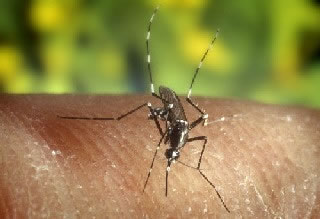
Is this your child's symptom?
- Bite from an insect (bug)
- Bees, mosquitoes, fire ants, ticks and spiders are not covered. See those care guides.
Next Steps
Causes
Symptoms of Insect Bites
- Insect bites usually cause a small red bump.
- Often, it looks like localized hives (one large one or several small ones).
- Sometimes, a small water blister occurs in the center of the bump. This is common in younger children.
- Itchy Insect Bites. Bites of mosquitoes, chiggers (harvest mites), fleas, and bedbugs usually cause itchy, red bumps.
- Painful Insect Bites. Bites of horseflies, deer flies, and gnats usually cause a painful, red bump. Fire ants, harvester ants, blister beetles, and centipedes also cause a painful, red bump. Within a few hours, fire ant bites can change to blisters or pimples.
Cause of Insect Bite Reaction
- The skin bumps are the body's reaction to the insect's saliva.
- While the bug is sucking blood, some of its secretions get mixed in.
Anaphylaxis With Insect Bites: Very Rare
- A severe life-threatening allergic reaction is called anaphylaxis.
- The main symptoms are difficulty breathing and swallowing starting within 2 hours of the sting. Onset usually is within 20 minutes.
- Anaphylaxis can occur with bee, yellow jacket, wasp, or fire ant stings. Anaphylactic reactions are very rare after other insect bites. Reason: other insects don't have venom.
Problems Caused by Insect Bites
- Impetigo. A local bacterial infection. Gives sores, soft scabs and pus. Caused by scratching or picking at the bites. More common in itchy bites.
- Cellulitis. The bacterial infection spreads into the skin. Gives redness spreading out from the bite. The red area is painful to the touch.
- Lymphangitis. This is a bacterial infection that spreads up the lymph channels. Gives a red line that goes up the arm or leg. More serious because the infection can get into the bloodstream. (This is called sepsis.)
Care Advice for Insect Bites
Treatment for Insect Bites
- What You Should Know About Insect Bites:
- Most insect bites cause a red bump. Some are larger (like a hive). Some have a small water blister in the center. These are normal reactions to an insect bite.
- A large hive at the bite does not mean your child has an allergy.
- The redness does not mean the bite is infected.
- Here is some care advice that should help.
- Itchy Insect Bite Treatment:
- Steroid Cream. To reduce the itching, use 1% hydrocortisone cream (such as Cortaid). No prescription is needed. Put it on 3 times a day until the itch is gone. If you don't have, use a baking soda paste until you can get some.
- If neither is available, use ice in a wet washcloth for 20 minutes.
- Also, you can put firm, sharp, direct, steady pressure on the bite. Do this for 10 seconds to reduce the itch. A fingernail, pen cap, or other object can be used.
- Allergy Medicine. If the bite is still itchy, try an allergy medicine (such as Benadryl). No prescription is needed. Sometimes it helps, especially in allergic children.
- Painful Insect Bite Treatment:
- Soak a cotton ball in a baking soda solution. Rub the bite with it for 15 to 20 minutes. Do this once. This will usually reduce the pain.
- You can also use an ice cube in a wet washcloth for 20 minutes.
- To help with the pain, give an acetaminophen product (such as Tylenol). Another choice is an ibuprofen product (such as Advil). Use as needed.
- For painful bites, allergy medicines don't help.
- Antibiotic Ointment for Infected Bite:
- If the insect bite has a scab on it and the scab looks infected, use an antibiotic ointment. An example is Polysporin. No prescription is needed. Use 3 times per day. (Note: Usually impetigo is caused by scratching with dirty fingers).
- Cover the scab with a bandage (such as Band-Aid). This will help prevent scratching and spread.
- Wash the sore and use the antibiotic ointment 3 times per day. Cover it with a clean bandage each time. Do this until healed.
- Caution: For spreading infections (redness or red streaks), your child needs to be seen.
- What to Expect:
- Most insect bites are itchy for several days.
- Any pinkness or redness usually lasts 3 days.
- The swelling may last 7 days.
- Insect bites of the upper face can cause severe swelling around the eye. This is harmless.
- The swelling is usually worse in the morning after lying down all night. It will improve after standing for a few hours.
- Call Your Doctor If:
- Severe pain lasts more than 2 hours after pain medicine
- Infected scab not better after 48 hours of antibiotic ointment
- Bite looks infected (spreading redness gets bigger after 48 hours)
- You think your child needs to be seen
- Your child becomes worse
Prevention of Insect Bites
- Prevention Tips:
- Wear long pants, a long-sleeved shirt and a hat.
- Avoid being outside when the bugs are most active. Many insects that cause itchy bites are most active at sunrise or sunset. Examples are chiggers, no-see-ums, and mosquitoes.
- Insect repellents that contain DEET are helpful in preventing many insect bites. Read the label carefully.
- DEET Products: Use on the Skin.
- DEET is a very effective bug repellent. It also repels ticks and other insects.
- The AAP approves DEET use over 2 months of age. Use 30% DEET or less. Use 30% DEET if you need 6 hours of protection. Use 10% DEET if you only need protection for 2 hours. (AAP 2003).
- Don't put DEET on the hands if your child sucks on their thumb or fingers. (Reason: prevent swallowing DEET.)
- Warn older children who apply their own DEET to use less. A total of 3 or 4 drops can protect the whole body.
- Put it on exposed areas of skin. Do not use near the eyes or mouth. Do not use on skin that is covered by clothing. Don't put DEET on sunburns or rashes. Reason: DEET can be easily absorbed in these areas.
- Wash it off with soap and water when your child comes indoors.
- Caution: DEET can damage clothing made of man-made fibers. It can also damage plastics (such as eye glasses) and leather. DEET can be used on cotton clothing.
- Permethrin Products: Use on Clothing.
- Products that contain permethrin (such as Duranon) work well to repel insects and ticks.
- Unlike DEET, these products are put on clothing instead of skin.
- Put it on shirt cuffs, pant cuffs, shoes and hats.
- You can also use it on other outdoor items (mosquito screens, sleeping bags).
- Do not put permethrin on the skin. Reason: Sweat changes it so it does not work.
- Picaridin Products:
- Picaridin is a repellent that is equal to 10% DEET.
- It can safely be put on skin or clothing.
And remember, contact your doctor if your child develops any of the 'Call Your Doctor' symptoms.
When to see a Doctor
Call 911 Now
- Past life-threatening allergic reaction to same insect bite (not just hives) and bitten less than 2 hours ago
- Trouble breathing or wheezing
- Hoarse voice, cough, or tightness in the throat or chest
- Trouble swallowing, drooling or slurred speech
- Hard to wake up
- Acts or talks confused
- You think your child has a life-threatening emergency
Go to ER Now
- Stiff neck (can't touch chin to the chest)
Call Doctor or Seek Care Now
- Hives or swelling all over the body
- More than 20 fire ant stings in a child less than 1 year old
- Fever and bite looks infected (spreading redness)
- Your child looks or acts very sick
- You think your child needs to be seen, and the problem is urgent
Contact Doctor Within 24 Hours
- Severe pain and not better 2 hours after taking pain medicine
- New redness around the bite starts more than 24 hours after the bite
- More than 48 hours since the bite and redness gets larger
- Redness or red streak around the bite gets larger than 1 inch (2.5 cm)
- You think your child needs to be seen, but the problem is not urgent
Contact Doctor During Office Hours
- Scab that looks infected (drains pus or gets bigger) not better with antibiotic ointment
- You have other questions or concerns
Self Care at Home
- Normal insect bite
- Questions about insect repellents (such as DEET)
If NOT, try one of these:
Disclaimer: this health information is for educational purposes only. You, the reader, assume full responsibility for how you choose to use it.