Corpus Callosotomy
What is the corpus callosum and how is it related to seizures?
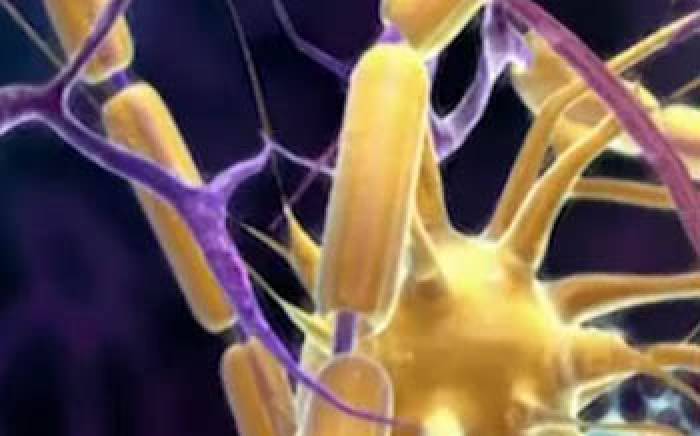
The corpus callosum is a major structure permitting exchange of information between the two hemispheres, or halves, of the brain. In some children, seizures may spread from one hemisphere to the other through the corpus callosum. This may result in generalized seizures, including ‘drop attacks’ or atonic seizures.
What is a corpus callosotomy?
When patients with generalized seizures, and drop attacks in particular, fail multiple seizure medications, a corpus callosotomy may be considered. In this operation:
- The front 2/3rds, or in some cases, the entire corpus callosum is divided.
- The neurosurgeon can approach and divide the corpus callosum by operating between the two brain hemispheres, thus minimizing any potential injury to the brain.
- An alternative approach uses the Gamma Knife to non-invasively ablate a section of the corpus callosum without open surgery.
Corpus callosotomy outcomes
While a corpus callosotomy does not ‘cure’ the seizures, one half to 2/3rds of properly selected patients enjoy an improvement in seizure frequency and severity. While drop attacks respond most favorably to this operation, other seizure types may also be improved. Major complications from this surgery are rare.
Corpus callosotomy procedure: what to expect
- The operation takes place under general anesthesia, and takes about four hours.
Usually a linear incision is used, over the top of the head. - A small window of bone is removed to perform the surgery, and then replaced after the corpus callosum has been divided.
- Absorbable sutures are placed in the skin, and the child is awakened in the recovery room.
- After overnight observation in the Intensive Care Unit, the child is transferred to our neurosurgery/neurology ward for an additional few days of recovery.
- The St. Louis Children's Hospital comprehensive epilepsy team has evaluated hundreds of children for this procedure, and has performed several dozen callosotomies as of 2008 without significant complication.

Selected publications and abstracts from our faculty
- Tubbs RS, Smyth MD, Salter G, Blount JP. Endoscopic corpus callosotomy: An animal study. Journal of Pediatric Neurology 1(1):25-28; 2003.
- Tubbs RS, Smyth MD, Salter G, Doughty K, Blount JP. Eyebrow incision with supraorbital trephination for endoscopic corpus callosotomy: a feasibility study. Child’s Nervous System 20(3):188-91; 2004.
- Smyth MD, Klein E, Dodson WE, Mansur D: Radiosurgical posterior corpus callosotomy in a child with Lennox-Gastaut syndrome. Journal of Neurosurgery:Pediatrics, 106(4):312-315, 2007.
- Johnston JM, Vaishnavi SN, Smyth MD, He BJ, Zhang DY, Zempel JM, Shimony JS, Snyder AZ, Raichle ME. Loss of resting interhemispheric functional connectivity after complete section of the corpus callosum. Journal of Neuroscience 18;28(25):6453-8, 2008.
- Ojemann SG, Smyth MD, and Peacock WJ. Functional Neurosurgery in the Child. Handbook of Pediatric Neurosurgery, Frim DM and Gupta N (eds), Landes Bioscience, Georgetown TX, 2006.
- Blount JP, Tubbs RS, Smyth MD. Endoscopic Corpus Callosotomy: Porcine Cadaveric Studies. Poster presentation at the American Epilepsy Society Meeting, New Orleans, LA 2004.
- Smyth MD, Klein E, Dodson E, Mansur D: Radiosurgical transection of the posterior corpus callosum in a child with epilepsy. Platform presentation to the International Stereotactic Radiosurgery Society, San Francisco CA 2007.
- Johnston JM, Vaishnavi SN, He BJ, Smyth MD, Zempel JM, Shimony JS, Snyder AZ, Raichle ME. Loss of resting interhemispheric functional connectivity after complete corpus callosotomy in a 6 year old child with intractable epilepsy. Poster presentation, Society for Neuroscience, San Diego, CA 2007.
- Zhao H, Drzymala RE, Klein EE, Smyth MD, Mansur DB. Peripheral dose investigation of a corpus callosotomy by Gamma Knife, Model C. & Perfexion. Poster presentation to the American Association of Physicists in Medicine, Houston TX, July 2008.