What Are X-rays?
 X-rays are the most common imaging test. They allow physicians to see bones and organs within your child’s body. An X-ray is quick, painless and safe, especially when compared to other methods of examining bones and internal organs.
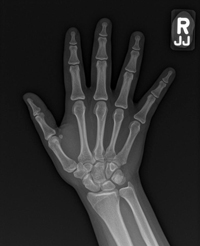
No radiation remains in the body once the exam is complete. Radiation is a beam that is sent only when the machine is turned on. X-ray beams, a form of radiation, pass quickly through a specific body part and strike a special film plate on the other side of that body part. A black and white image of inside the body is created on the film plate that can then be viewed by our pediatric radiologists.
 Your child will not feel the X-ray beam itself, but may feel uncomfortable or awkward because of the way he or she must sit, stand or move a body part for a few seconds while the X-ray is taken. It’s important to hold still during an X-ray because any movement can cause the image to be blurry.

Depending on which body part is being X-rayed, your child may also have a heavy apron made of lead placed on the body to help decrease the radiation exposure to areas not imaged. If a parent is with the child in the exam room while an X-ray is being taken, he or she will also be asked to wear a lead apron as an extra precaution against exposure to the X-ray beam.