What is a surgical site infection?
A surgical site infection occurs after surgery in the part of the body where the surgery took place. Surgical site infections can sometimes be superficial and only appear on the skin. Other surgical site infections are more serious and can involve tissues under the skin, organs, or implanted material.
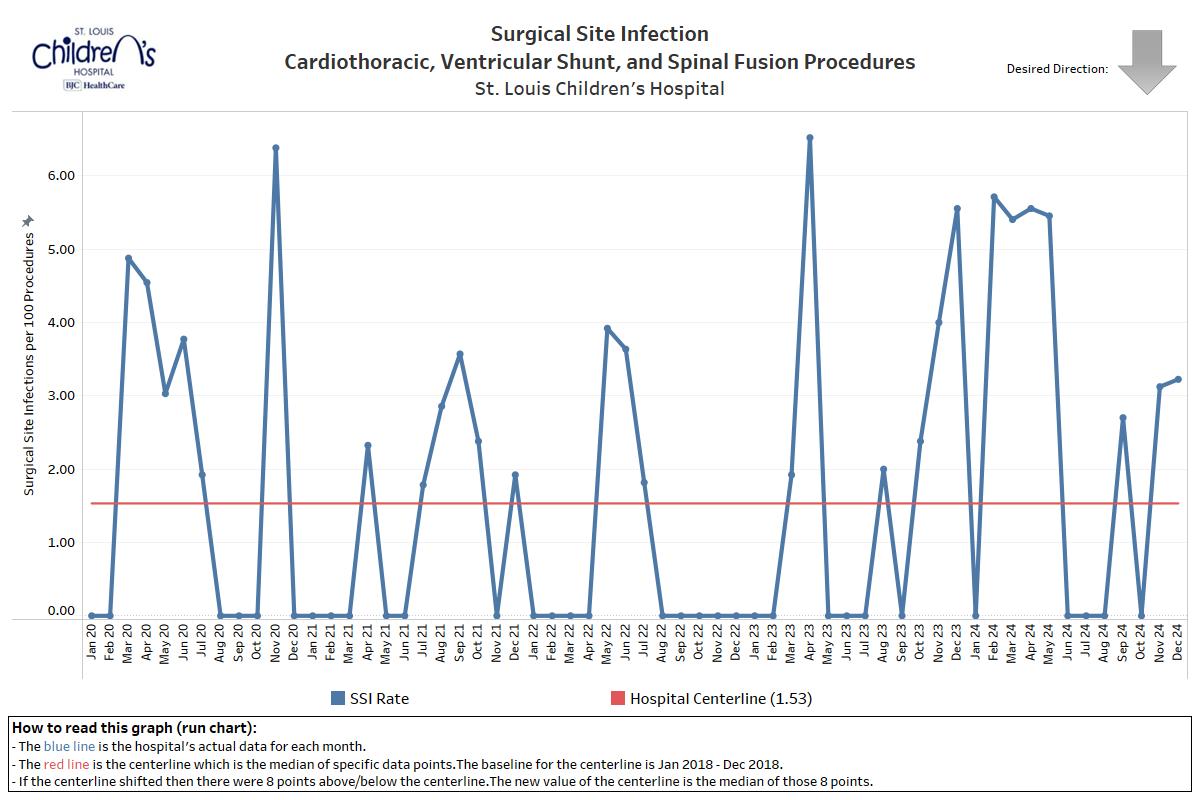
Our data:
The number of surgical cases per 100 surgeries where a patient has developed an infection.
What steps do we take to prevent surgical site infections?
- Standardizing how antibiotics are ordered and given to patients before and after surgery.
- Involving parents and caregivers in the prevention process by reviewing pre-surgical activities during clinic visits.
- - Stressing the importance of bathing and shampooing hair the day before surgery.
- - Using antibacterial soap and shampoo in high-risk cases.
- - Sleeping in clean bedding and pajamas the night before surgery.
- Using special bathing wipes with chlorhexidine gluconate (CHG) to clean the skin prior to surgery for high-risk cases.
- Keeping a patient’s body temperature warm before, during, and after their surgical procedure.
- Participating in Solutions for Patient Safety (SPS), a national improvement collaborative among children’s hospitals in the U.S. that focuses on reducing patient harm by sharing ideas, data, and best practices.
What can families do to prevent surgical site infections?
Before surgery:
- Tell your doctor about other medical problems your child may have. Health problems such as allergies, diabetes, and obesity could affect the surgery and treatment.
- Prior to arriving at the hospital, have your child take a bath or shower and wash their hair the night before or the morning of surgery. Ensure their bedding and pajamas are freshly laundered.
After surgery:
- Make sure that all health care team members clean their hands with soap and water or use hand sanitizer before and after providing care for your child.
- Family and friends who visit should not touch surgical wounds or dressings.
- - Family and friends should clean their hands with soap and water or hand sanitizer before and after visiting. If you do not see them clean their hands, ask them to do so.
- - Make sure you understand how to care for your child’s wound before you leave the hospital.
- - Always clean your hands before and after caring for your child’s wound.
- - Before you leave the hospital, make sure you know whom to contact if you have questions or problems after you return home.
- - If your child has symptoms of an infection, such as redness and pain at the surgery site, drainage, or fever, call your child’s doctor immediately.