May 26, 2026, 8:57 a.m.
Jamie Kondis, MD
As a pediatrician, I spend a lot of time with children who are expected to sit still, answer questions, and move through busy days on someone else's schedule. Between school, activities, and homework, the pressure adds up quickly. That’s why I still encourage crayons. They slow things down in a way very few things do anymore.
Here are some reasons I continue to recommend them:
- Settling without being told to calm down: When a child starts coloring, their body often relaxes almost immediately. Shoulders drop. Breathing evens out. The room gets quieter. There’s no instruction to calm down and no expectation to perform. Coloring does that work on its own. For kids who feel overstimulated or wound up, that physical pause is helpful.
- A different way to communicate: Not every child wants to talk, and many can’t explain how they feel. That doesn't mean nothing is happening beneath the surface. Crayons give kids a way to show what they don't yet have words for. Sometimes they talk while they color, and sometimes they don't. Both are OK. The goal isn't to interpret the drawing like a test, but to give kids space to express themselves without any pressure.
- Low-pressure focus: Coloring asks kids to stay with one task for a few minutes. They have to choose a color and decide what comes next. Unlike screen time, there is no timer, no score, and no correct answer. This builds patience and attention without constant, high-speed stimulation.
- Control in small but important ways: Kids don't get many chances to be in charge, but coloring is one of them. They choose the colors, decide when the picture is finished, and decide whether the lines stay neat or wander off the page. That sense of control helps kids feel more confident and capable, especially on days when everything else feels decided for them.
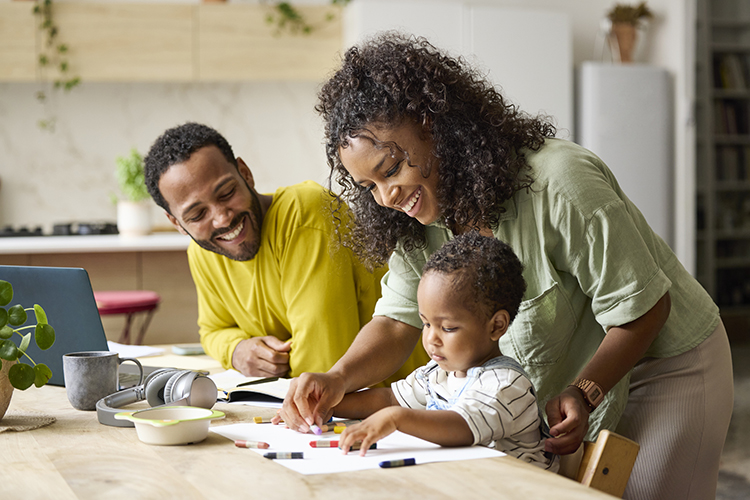
- Making connection easier: Some of the best conversations don't happen face to face. They happen side by side. Coloring together gives kids something to do with their hands while they talk or sit quietly, knowing someone is there with them. I find that parents often hear more in these moments than during direct questioning.
Crayons aren’t just about keeping kids busy. They give children space to slow down, focus, and express themselves in their own way. I encourage keeping them around at home, in waiting rooms, and anywhere kids might need a moment to reset. A box of crayons fits easily into a diaper bag or backpack. Paired with a small coloring book, they can be a lifesaver while waiting at a restaurant, during family gatherings, or even in the car on a road trip.
And if the crayons are broken, that’s fine, too. Broken crayons still work and can even be turned into a fun craft. I’ve done this one with my kids before: Melt Your Own Crayon Art from PBS.
 Jamie Kondis, MD, specializes in pediatric emergency medicine and child abuse pediatrics. She is a graduate of Westminster College in Fulton, Missouri, and received her medical degree from Indiana University School of Medicine. She completed her WashU Medicine pediatric residency at St. Louis Children's Hospital and served for a year as chief resident.