July 9, 2026, 9:27 a.m.
Jamie Kondis, MD
You may have seen social media posts claiming grandparents live longer when they spend time with their grandkids, that babysitting can help prevent dementia, or that your parents will be healthier if they spend more time with your children.
There is some truth behind the idea, but it is not only about grandparents.
As a pediatrician, I see how much children can benefit from relationships with caring adults across generations. That may be a grandparent. It may also be a great-aunt, great-uncle, neighbor, family friend, mentor, or another trusted adult who shows up in a child’s life.
Most of the research focuses on grandparents. But the benefit may come less from being a grandparent and more from staying connected. Time with children can give older adults routine, conversation, movement, and a sense of purpose, as long as the role stays manageable.
That is the part social media often leaves out.
What the research says
Some studies have found a link between moderate grandchild care and better health outcomes for older adults, including lower mortality risk or lower odds of dementia. That does not mean grandchildren are a cure for aging, loneliness, or memory loss. It also does not mean grandparents or other older adults should take on more child care than they can safely or comfortably handle.
The well-known Berlin Aging Study found that grandparents who occasionally helped care for their grandchildren had a 37% lower mortality risk compared to those who didn’t help with child care or didn’t have grandchildren. Researchers also looked at people who provided care outside their family. That finding is important because it suggests the benefit may not come from being a grandparent alone. It may come from connection, purpose, and having a regular role in someone else’s life.
A more accurate takeaway is that time with children may support healthy aging when the relationship feels connected, manageable, and enjoyable.
Why children can be good company for older adults
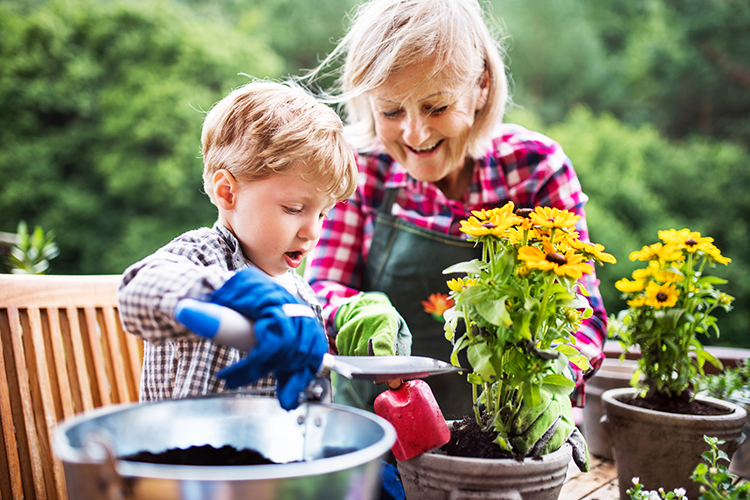
Children bring conversation, movement, routine, and purpose. A grandparent, aunt, uncle, neighbor, or family friend who reads with a child, attends a school program, takes a walk, plays a game, teaches a recipe, or listens to a teenager talk about their day is doing several healthy things at once.
They are connecting socially. They are using memory and attention. They may be moving more. They are part of something consistent and meaningful.
That can be good for older adults, especially during a time of life when social circles may get smaller because of retirement, health changes, loss, distance, or changes in family routines.
How children benefit
Children benefit from these relationships as well.
A trusted older adult can offer patience, stories, encouragement, and a different kind of attention that’s often hard for busy parents to provide. Through these relationships, kids can learn about history, practical skills, values, and perspective.
For some children, grandparents are central to that support. For others, the trusted older adult may be someone outside the immediate family. A great-aunt, neighbor, family friend, coach, volunteer, or mentor can still become part of a child’s circle of support.
Children do not need every meaningful adult relationship to look the same. They benefit when safe, caring adults are consistent, interested, and present.
When helping becomes too much
There is an important difference between connection and obligation.
A weekly visit, a school pickup, a shared dinner, or a few hours of babysitting may feel joyful and energizing. Full-time care, frequent last-minute requests, long days with young children, or responsibility that comes from a family crisis can feel very different.
Older adults who provide a lot of care may deal with fatigue, disrupted sleep, physical strain, financial pressure, or stress. In those cases, the relationship may still be loving, but the caregiving load can affect health. That applies to grandparents as well as other older adults who step in to help.
How families can keep it healthy
Families should be honest about what is helpful and what is too much.
Ask grandparents and other older adults about what they want to do, not only what they are willing to do. Keep plans realistic. Build in breaks. Share safety updates about car seats, allergies, medications, safe sleep, and screen time. Make sure the adult has what they need to feel confident and supported.
The healthiest relationships are not built on guilt. They are built on connections.
A better way to think about it
So, do grandchildren help grandparents live longer? Maybe. But not because children have magical health effects.
The likely benefit comes from what healthy intergenerational relationships can provide: less loneliness, more purpose, more movement, more routine, more conversation, and more joy. And that benefit is not limited to grandparents.
Time with older adults can be good for children. A child does not need a perfect activity or a big outing to build that bond. A phone call, a puzzle, a walk, a library visit, a ballgame, a card game, a shared recipe, or a bedtime story over FaceTime can all count.
The social media posts are not completely wrong. They are just incomplete.
The best version is simple: Regular connections should feel loving, safe, and manageable for everyone involved.
 Jamie Kondis, MD, is a WashU Medicine pediatric emergency physician specializing in child abuse pediatrics. She is a graduate of Westminster College in Fulton, Missouri, and received her medical degree from Indiana University School of Medicine. She completed her WashU Medicine pediatric residency at St. Louis Children's Hospital and served for a year as chief resident.