A devastating irony
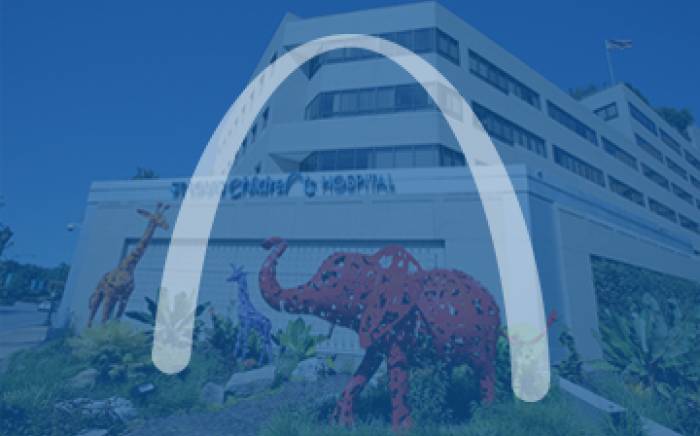
Molly has spent her entire career as a registered nurse at the St. Louis Children’s Hospital and Washington University Heart Center. But she never imagined that her own child would become a patient.
That changed at her 20-week ultrasound appointment when Molly’s obstetrician became concerned that something was wrong with her baby’s heart. After receiving a referral, Molly immediately made an appointment at the Fetal Heart Center for a fetal echocardiogram.
Suddenly, Molly and her husband, Sam, found themselves sitting across from WashU Medicine fetal cardiologist, Caroline Lee, MD, learning that their unborn daughter, Audrey, was diagnosed with a congenital left ventricular aneurysm in her heart.
“It's just this surreal feeling because it's something I’d seen from the outside looking in and now it was happening to me,” Molly says.
A congenital left ventricular aneurysm is a rare malformation in which the left chamber of the heart is very thin. It can lead to irregular heartbeats and heart failure. Dr. Lee explained that patients with this condition typically have three potential outcomes: death while in utero, death after birth, or a heart transplant after birth.
Despite the challenges, Molly and Audrey successfully reached their delivery day together.
When Audrey was born in March 2021 she was a full-term baby, but she was also diagnosed with dilated cardiomyopathy. This is when the heart muscle becomes enlarged and stretched, causing the heart to become weak and pump inefficiently.
At 3 months old, Molly and Sam noticed a rapid decline in Audrey and took her to St. Louis Children’s Hospital. Doctors confirmed that Audrey needed a heart transplant to live.
“In more than 30 years of practicing medicine, I have had the privilege of caring for many patients and their families,” says Janet Scheel, MD, WashU Medicine medical director of pediatric heart transplant, who oversaw Audrey’s care. “With Audrey’s diagnosis, we understood the profound impact it would have on her and her family, and we were committed to providing the best possible care and support during such a difficult time.”
The journey begins
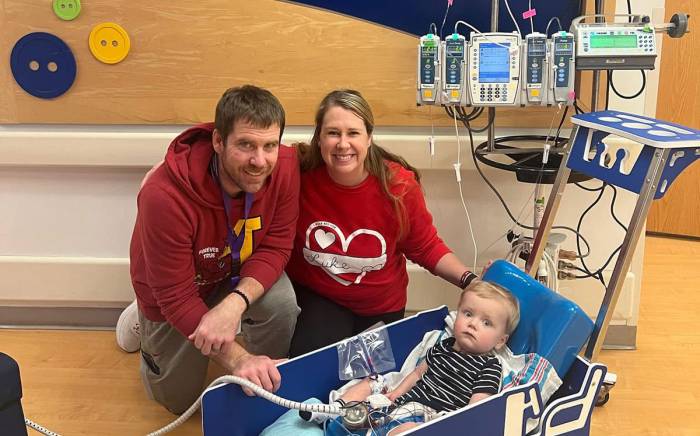
Audrey was placed on a heart transplant list and had a ventricular assist device (VAD) implanted in her chest. The VAD is commonly referred to as a “heart helper,” and acts as a mechanical pump to support heart function and blood flow. It also requires a hospital stay until a donor heart becomes available.
“We didn’t want to leave Audrey alone in the hospital, but we also had a 2-year-old daughter at home,” Molly says. “I would be at the hospital for 24 hours, then Sam would relieve me and stay for 24 hours.”
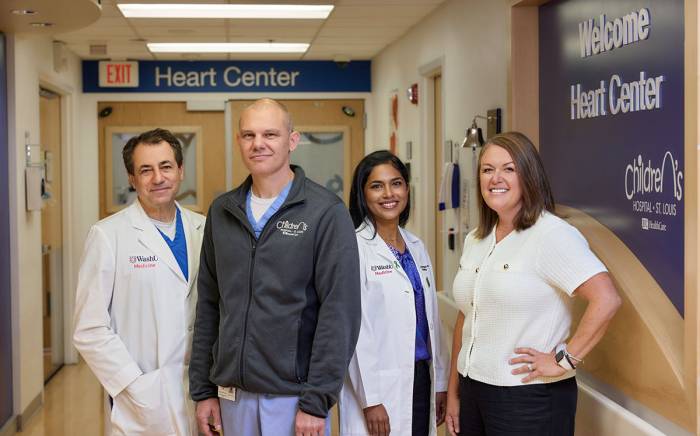
Even though Molly reduced her work hours, she was essentially living where she worked. She credits her Heart Center colleagues for treating her as their assistant nurse manager when she was on the clock. However, the moment Molly was off duty, they supported her as Audrey’s mom.
“I was amazed at both Molly and Sam's grace,” says Dr. Scheel. “They took everything in stride. They always wanted what was best for Audrey.”
Molly and Sam relied heavily on the Child Life Services department while they waited for a donor heart. Child Life works with patients and families to develop ways to cope with the fear and anxiety that accompanies a long hospital stay. When their older daughter, Caroline, was grappling with why her parents and baby sister were spending so much time at the hospital, Child Life was there to help.
“I think it's rare for a center within a big hospital to offer such comprehensive care,” says Molly. “The Heart Center nurses are thinking about the psychosocial comforts that a family might need. Child Life checks in with the patients and families to make sure they have the physical comforts they need while they’re staying here. The physicians keep pushing the boundaries of innovative care. That is what truly sets our center apart from other places.”
At 6 months old, a donor heart became available for Audrey. Her surgery was a success, and Audrey was able to celebrate her first Christmas at home with her family.
Living bravely
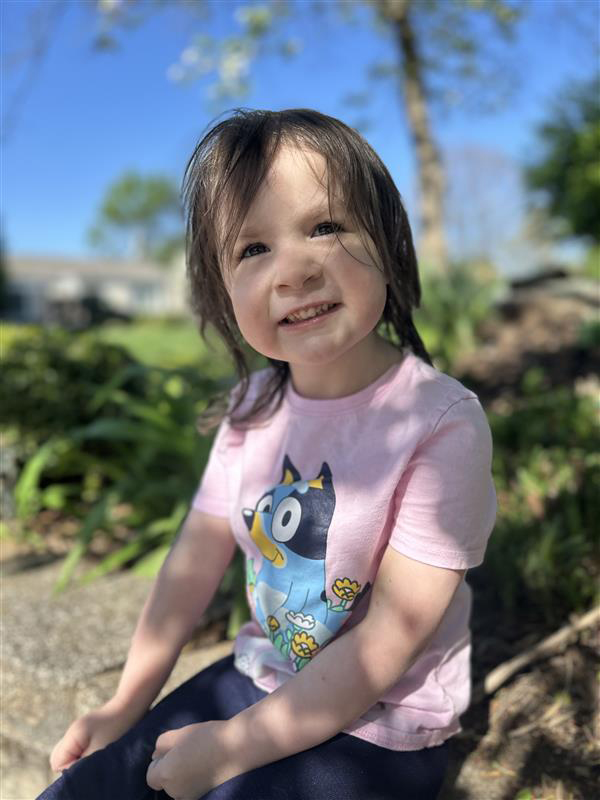
Today, Audrey is a smart, funny, and joyful 4-year-old, who looks forward to “visiting her friends” at St. Louis Children’s. She’s taking swimming lessons, will play soccer in the fall, and considers her mom her best friend.
“She gets up several times throughout the night and will come downstairs and say, ‘I just needed to tell you I love you.’ And then she'll go back to bed,” Molly says.
“Audrey is full of spunk and is a well-adjusted terrific, funny kid which is a tribute to her parents,” says Dr. Scheel.
Audrey still relies on Child Life when she comes in for routine checkups or a blood test. At a recent appointment, a Child Life specialist brought in Duo Dog Casey, a chocolate Labrador retriever who serves as a St. Louis Children’s facility dog, to provide comfort.
“She wants Casey in the room with her while she’s having a procedure done,” Molly says. “It just helps her so much. She is so brave. The things that she's been through at 4 years old, I feel like an adult would say, ‘I don't want to do this anymore,’ but she does it without batting an eye.”
Next summer, Audrey will attend St. Louis Children’s Camp Rhythm, a residential camping experience for local children with congenital or acquired heart anomalies. At Camp Rhythm, kids participate in activities such as archery, arts and crafts, games, and sports. It provides a safe and accepting environment for children who are living with a heart disease, and many campers end up making lifelong friendships.
“Seeing Audrey in the clinic doing well is what makes my job worthwhile,” says Dr. Scheel. “We can make life normal for these children and take the best possible care of the extraordinary gift the donor has given us.”
“Our biggest goal for Audrey is to help her live a normal life,” Molly says. “We do not take for granted any days that she gets to live and be a normal kid.”
Learn more about the Heart Center here.