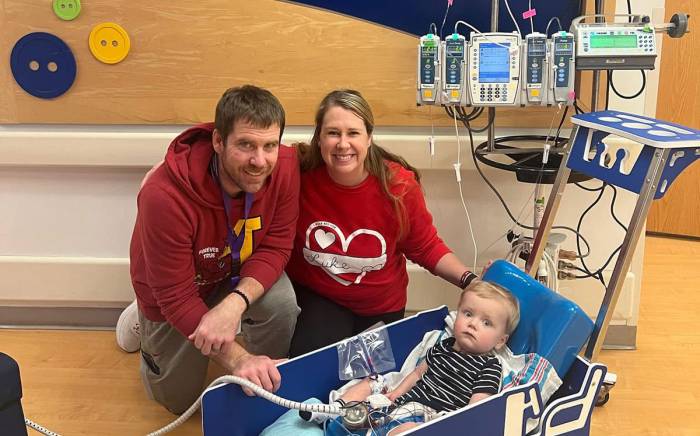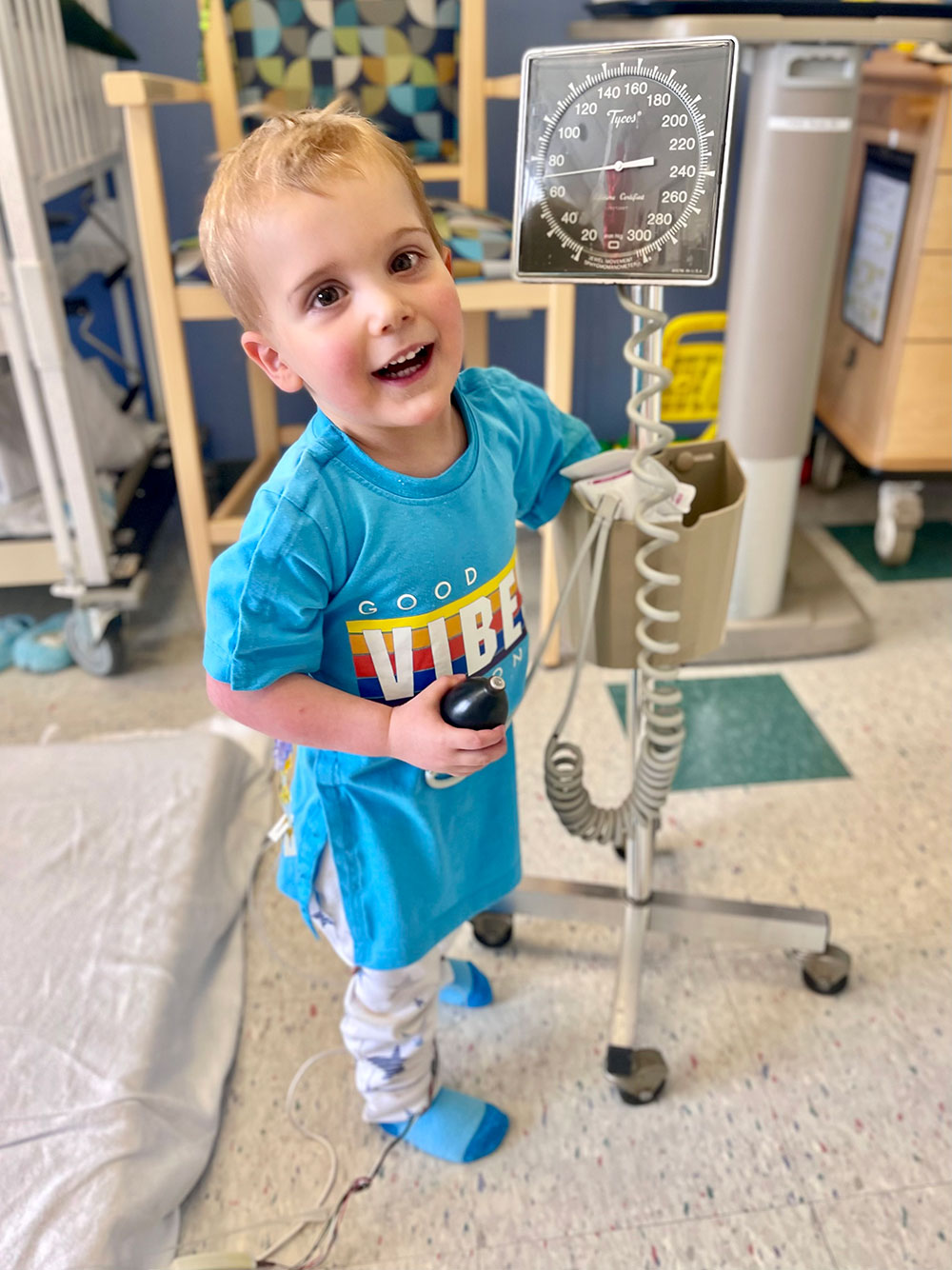
In December 2022, David arrived at St. Louis Children’s Hospital carrying his beloved Cookie Monster stuffie. David, then just 2 years old, was living with the complex congenital heart defect hypoplastic left heart syndrome (HLHS), a condition in which the left side of the heart is critically underdeveloped. David’s heart was failing, and as his oxygen saturation dropped, he began to turn a pale blue color, just like his favorite snuggle buddy.
David’s journey had spanned multiple hospitals. In a hospital in a different city, doctors performed a surgery aimed to rehabilitate his heart’s small left ventricle and help it grow. The procedure didn’t yield the lasting improvement they had hoped for, says his mother, Amanda, and a follow-up echocardiogram began to show signs of heart failure. Physicians tried a catheter-based intervention in hopes of reversing his heart's decline and restoring its function, but it soon became clear that this might not be possible.
David’s family had traveled the country in search of the best care for him, but when his doctors recommended they find a pediatric transplant hospital close to home, they chose St. Louis Children’s, which is staffed by WashU Medicine pediatric specialists. It was a decision guided by necessity, but it was also about trust. The St. Louis Children’s and WashU Medicine team was ready and able to handle their little boy's complex case.
“This was the fourth hospital system where David received care,” Amanda says. “His whole life, we’ve been trying to get the best care for him with the best outcome. The team at Children’s didn’t say it would be easy. They didn’t say it would work. But they were willing to try.”
The wait for a heart
After establishing care at St. Louis Children’s, David’s family knew that he was in heart failure and that transplant was a possibility. But a stomach bug he caught in 2022 added a layer of urgency.
"You don’t think of stomach bugs as blessings, but that’s what landed him in the hospital and got him on 24-hour monitoring,” Amanda says.
When David was hooked up to the monitor, the hospital team saw that his oxygen saturation was dropping too low, even though David, a typical energetic 2-year-old, wasn’t really showing any other signs of distress. The WashU Medicine and St. Louis Children's Hospital team advised the family to get on the wait list for a heart transplant.
St. Louis Children’s and WashU Medicine established a pediatric heart transplant program in 1986 and is one of the largest and most active programs in the country. WashU Medicine pediatric specialists and specially trained St. Louis Children’s nurses work together to provide comprehensive care that’s personalized for every family—before, during, and after surgery.
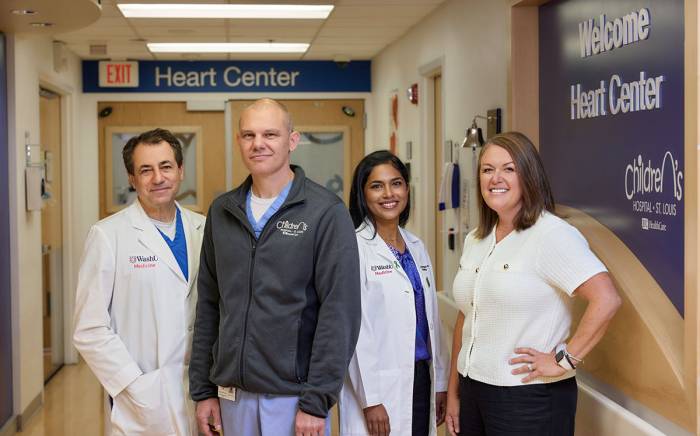
But until it was his turn to receive a new organ, David needed to be hospitalized so his care team, which included WashU Medicine transplant surgeon Jacob Miller, MD, could monitor him, ensuring he was as healthy as possible before his big surgery.
“Everyone did a lot of work to make sure he was in as good of shape as possible,” Dr. Miller says. David’s team included a heart failure cardiologist as well as a team of physical therapists, occupational therapists, and nutritionists.
Life in the hospital was full of small routines that gave David comfort—especially his daily walks around the heart center, Cookie Monster by his side.
“It was his reward for getting poked with needles,” Amanda says. “He loved going for walks. He would light up the hallways. Everyone at the hospital would engage with him. They were so friendly and silly with him. When you think of a hospital, you think of gloom and quiet. It’s not that way at Children’s. They tried to make it as positive an experience as it could be.”
Finally, almost four months after David was hospitalized, his family got the news: There was a heart for David. When transplant day came, Amanda thought she knew what to expect. The team at St. Louis Children’s had been preparing the family along David’s journey.
“We were used to seeing him sedated and hooked up to machines,” Amanda says. But walking into the room after David’s surgery, she froze. “He wasn’t blue anymore,” she says. “I didn’t realize how blue he had been until he wasn’t.”
The surgery was a success.
“David had multiple previous operations and was left with a unique anatomy that made reconstruction a little more challenging, but he did incredibly well,” Dr. Miller says. “He has a great family and a lot of support. He’s an awesome little kid.”
David's recovery was nothing short of remarkable. Dr. Miller had told the family he’d be happy if David was up and walking within two weeks. Instead, David’s breathing tube came out the next day. He was discharged on day 15.
“We were prepared to be in the hospital for months after his transplant surgery,” Amanda says. “It was amazing. Dr. Miller came to check on him at least once a day in person. To see him, checking up on David and checking up on us as parents—it meant a lot. It made us feel important.”
Celebrating transplant milestones
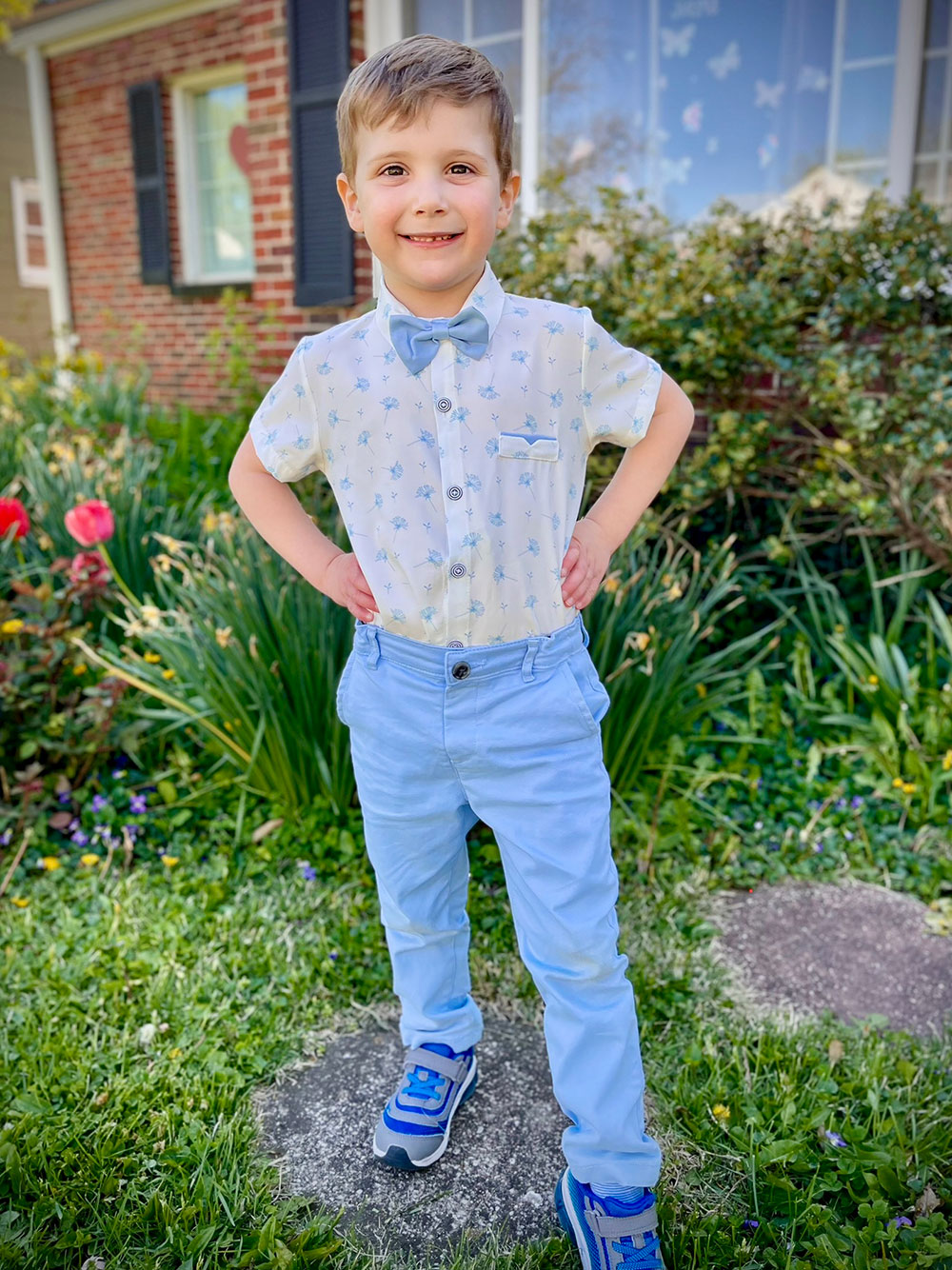
David’s first year after transplant was intense, packed with nearly 100 appointments, including lab work, heart clinic visits, specialist appointments, and feeding therapy. But he and his family, who were by now experts in resilience, made it through. This past March, David turned 5 and celebrated the second anniversary of his transplant in April. The family commemorated the occasion with cake and a special dinner of his choosing. Finally, Amanda says, they are living “more of what people might consider a normal life” with David loving classic 5-year-old boy things: Snoopy, Blues Clues, and trucks.
Through it all, David has held on to a fond view of his hospital stay. He remembers the walks, the games, the rubber ducks in the sponge bath buckets. He calls the experience of being in the hospital “the overnight doctor,” a nickname that captures his childlike view of a grown-up ordeal. Cookie Monster is still a fixture, but he stays in David’s bed now. Lately, his favorite stuffed animal changes every few weeks, including a tiger named Stripes, a cat named Pandy, and more.
“I think this worked out the best way it possibly could have,” Amanda says, reflecting on her son’s transplant. “It was the hardest and best thing. Failure was not an option, so we just kept going.”
Learn more about St. Louis Children’s Hospital and WashU Medicine’s heart transplant program.