November 11, 2025, 10:25 a.m.
The Hospitalist Team
Why golf carts and e-scooters are unsafe for children
Golf carts and e-scooters may look harmless, but their lightweight designs make them unstable. They tip easily or lose balance during sharp turns and sudden stops. Both lack basic restraints and impact protection, increasing the risk of falls, collisions, and injuries when clothing or accessories get caught in moving parts such as wheels or axles. If a golf cart is struck by a car on the street, its open design and lack of protective features make it less safe than riding in a car.
Golf carts were designed to carry adults and equipment around golf courses, not children through crowded neighborhoods. E-scooters were built for short-distance adult use and can reach speeds that are unsafe for children to control.
Children can be thrown off during quick turns, struck while running alongside, or injured after falling onto the pavement. Clothing and loose fabric can also snag on handlebars, wheels, or open sides creating additional hazards.
Research shows golf cart injury rates are more than twice as high in children as in adults or seniors. Pediatric emergency physicians also report a growing number of e-scooter injuries, including fractures, concussions, and abrasions, often tied to missing helmets or a lack of supervision.
Safety reminders for families
Golf carts and e-scooters are not intended for child passengers or unsupervised use. If families choose to use them, safety should come first.
- Only licensed drivers should operate golf carts.
- Children should not drive or ride e-scooters intended for adults.
- Allow plenty of time and distance to slow down. Many golf carts have brakes only on the rear wheels, which makes sudden stops unstable.
- Riders should sit securely in golf carts or stand firmly on e-scooters, keeping both feet planted and using handgrips or restraints when available.
- Keep arms and legs inside the golf cart and away from wheels or moving parts.
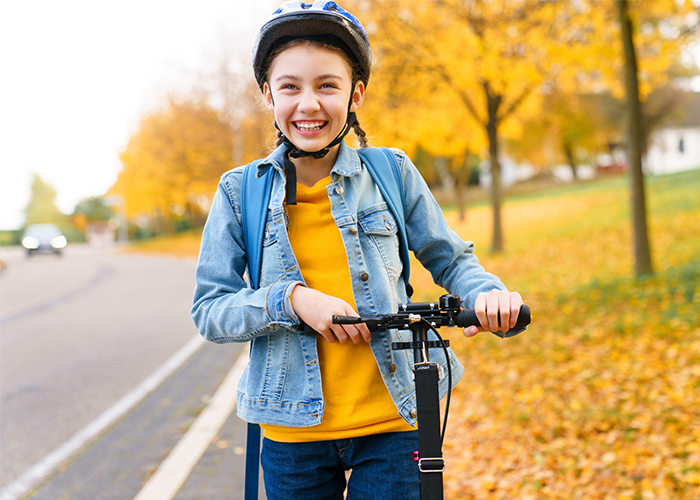
- Wear a helmet when using e-scooters.
- Riders should not get on or off until the golf cart or e-scooter comes to a complete stop.
Be prepared
Golf carts and e-scooters may seem convenient, but they can quickly turn a fun night or any outing into a medical emergency. Plan ahead, set clear ground rules, and know the location of your nearest pediatric hospital with an Emergency Department.
In case of a medical emergency with a child, determine where the nearest accredited, Level I pediatric trauma center is located. Find the St. Louis Children’s Hospital pediatric Emergency Department location nearest you.
 Lindsay Clukies, MD, is a WashU Medicine Emergency Medicine physician and the associate medical director for trauma services at St. Louis Children's Hospital. She cares for children and families during some of their most critical moments and works to advance injury prevention efforts in the community. As a mother of three, she brings both medical expertise and a parent's perspective to her commitment to child safety.
 Brittany Kaiser is a certified child passenger safety technician and lead public health educator with St. Louis Children's Hospital's Safety Stop program, which provides trauma injury prevention education to families on topics such as car seat, home, helmet, and sleep safety. She has appeared on local media to discuss child safety topics, offering education on proper car seat installation and other safety guidelines for parents in the St. Louis area.