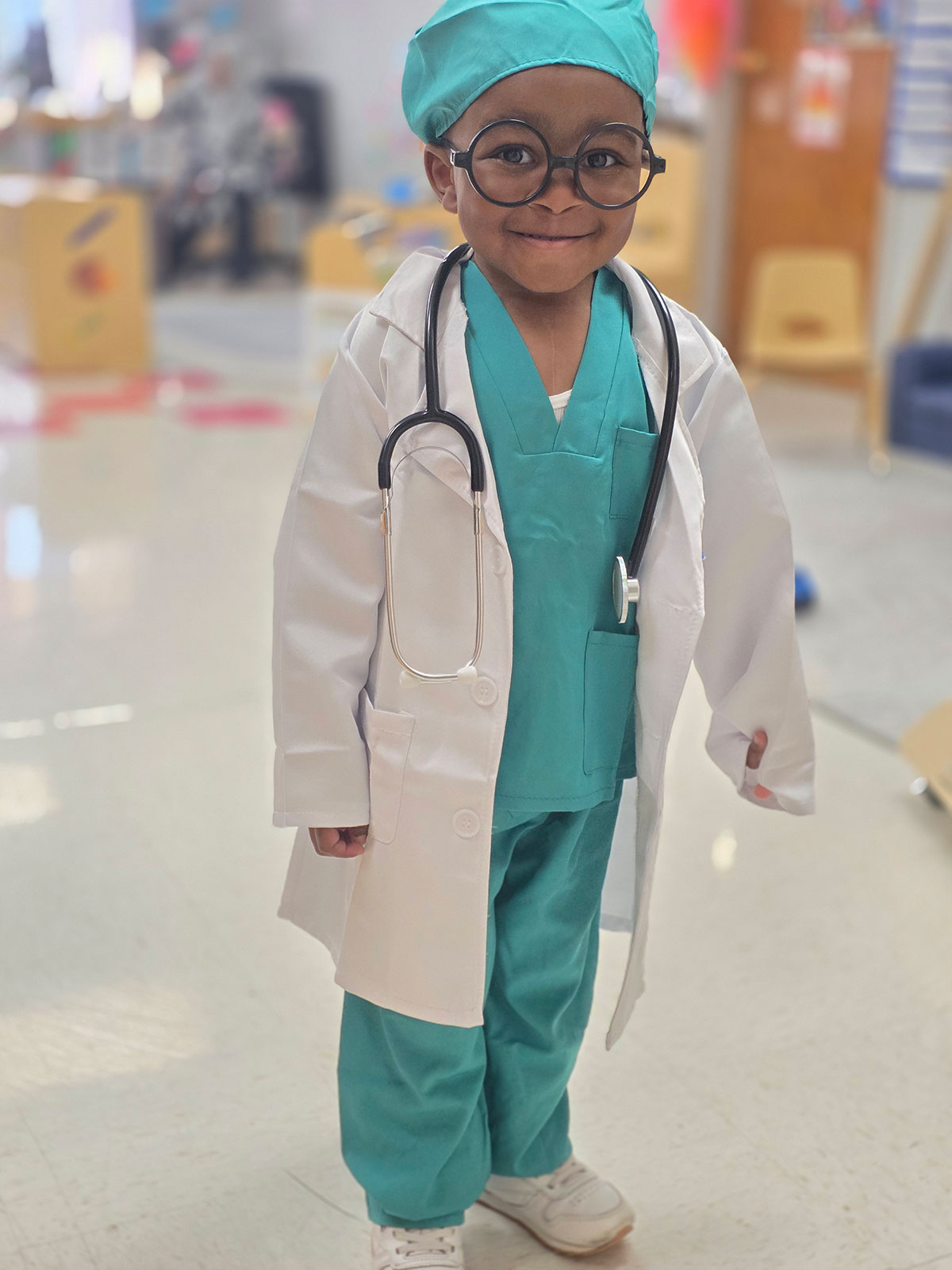
Aveion, 3, knows what he wants to be when he grows up.
“He’s kind of obsessed with doctors right now,” says his mother, Kahdijah.
To encourage him, Kahdijah and Alan, Aveion’s father, bought Aveion a doctor costume for Halloween. Although the holiday was months ago, Aveion hasn't stopped playing the role of house doctor to his parents and siblings. During flu season, “Dr. Aveion” makes sure to take everyone’s temperatures, but he especially enjoys checking everyone’s hearts.
“He tells us to take a deep breath while he uses his toy stethoscope,” Alan says. “I think he's obsessed with checking our hearts because that's what they always do to him.”
“They” refers to the pediatric cardiology team of WashU Medicine physicians at St. Louis Children’s Hospital. Aveion has been a patient since before he was born.
A life-changing discovery
When Kahdijah was six months pregnant, her OB-GYN noticed an irregularity on an ultrasound and recommended a fetal echocardiogram at the Fetal Heart Center, part of the St. Louis Children’s and WashU Medicine Heart Center. The Fetal Heart Center team specializes in detecting, evaluating, and managing congenital heart defects before a child is born. A fetal echocardiogram is a detailed ultrasound performed on a baby’s heart before birth to check for any abnormalities.
After the ultrasound, Kahdijah and Alan met Caroline Lee, MD, a WashU Medicine pediatric cardiologist and director of the Fetal Heart Center. Dr. Lee explained that the imaging indicated that Aveion had a large ventricular septal defect, or VSD, which is the most common type of congenital heart defect. A VSD is an opening or hole in the dividing wall, known as the septum, between the two lower chambers of the heart, the right and left ventricles.
Because of this opening, blood from the left ventricle flows back into the right ventricle. This causes an extra amount of blood to be pumped into the lungs by the right ventricle, which can create congestion in the heart and lungs.
While some VSDs close naturally over time, Aveion would likely need heart surgery after birth to repair his. The good news is that most children who undergo surgery for VSDs lead healthy, normal lives.
“When you’re given news like that, you really can't do anything until the baby comes,” Kahdijah says. “So, you just wait.”
Playing the waiting game
When Aveion was born in late 2022, Kahdijah and Alan tried to remain hopeful.
“Each time I would visit Dr. Lee, I would say, ‘Tell me some good news. Tell me that the hole has closed and that he won't need surgery,’" Kahdijah says. “But she would tell us that we still had to watch it and see.”
With each passing month, it became clear that Aveion was struggling. He was unable to latch during breastfeeding, making it difficult to eat and gain weight. Even when he was given high-calorie formula, he still exhibited low energy. He was also prescribed medication to help alleviate fluid that had developed around his heart.
“Aveion had the typical symptoms for a baby with a large VSD,” says Dr. Lee. “While we allow some time for the VSD to become smaller and for the infant to grow, large defects most often require surgery to close the hole in the heart. Fortunately, outcomes after surgical repair of VSDs are excellent.”
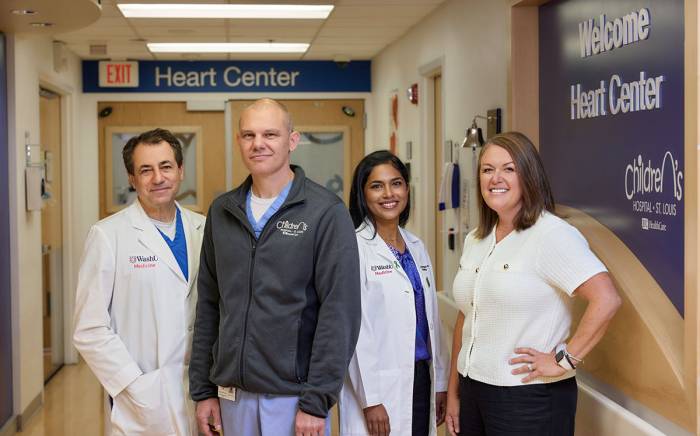
Having a sick child is stressful for any parent, but Kahdijah and Alan felt secure knowing Aveion was in safe hands with the multidisciplinary and collaborative team at the Heart Center, including cardiologists, surgeons, neonatologists (specialists in newborn care), and experts from other pediatric heart specialties.
“When you have a child with a heart problem, it’s not a light situation,” Kahdijah says. “But the warmth of the office and the ease of talking to Dr. Lee made things better.”
By the summer of 2023, the VSDs had not closed, and one side of Aveion's heart was beginning to enlarge. With Dr. Lee’s guidance, Kahdijah and Alan made a plan for Aveion to undergo heart surgery.
Trusting the process
Jacob Miller, MD, a WashU Medicine pediatric heart surgeon, walked the parents through every step of the surgery, even drawing a diagram of the procedure.
On the day of surgery, Kahdijah and Alan were kept up to date through a secure app, which provided peace of mind during a challenging time. They were also in constant communication with the Heart Center medical staff.
“During their rounds, the doctors and nurses would give me updates and talk about the next course of action, and they allowed me to listen and ask questions,” Kahdijah says. “They made sure to explain everything so that I understood. I really appreciated that.”
After five hours, Aveion's surgery was a success. Although his first night in the cardiac intensive care unit (CICU) was challenging—the medical staff was ready to take care of Aveion, including extra breathing treatments—once his chest tube was removed, Aveion began to heal quickly.
"By the second day, he was standing up and pulling himself up on the side of the crib,” Alan says. “By the third day, we were moved out of the CICU.”
The rhythm of life
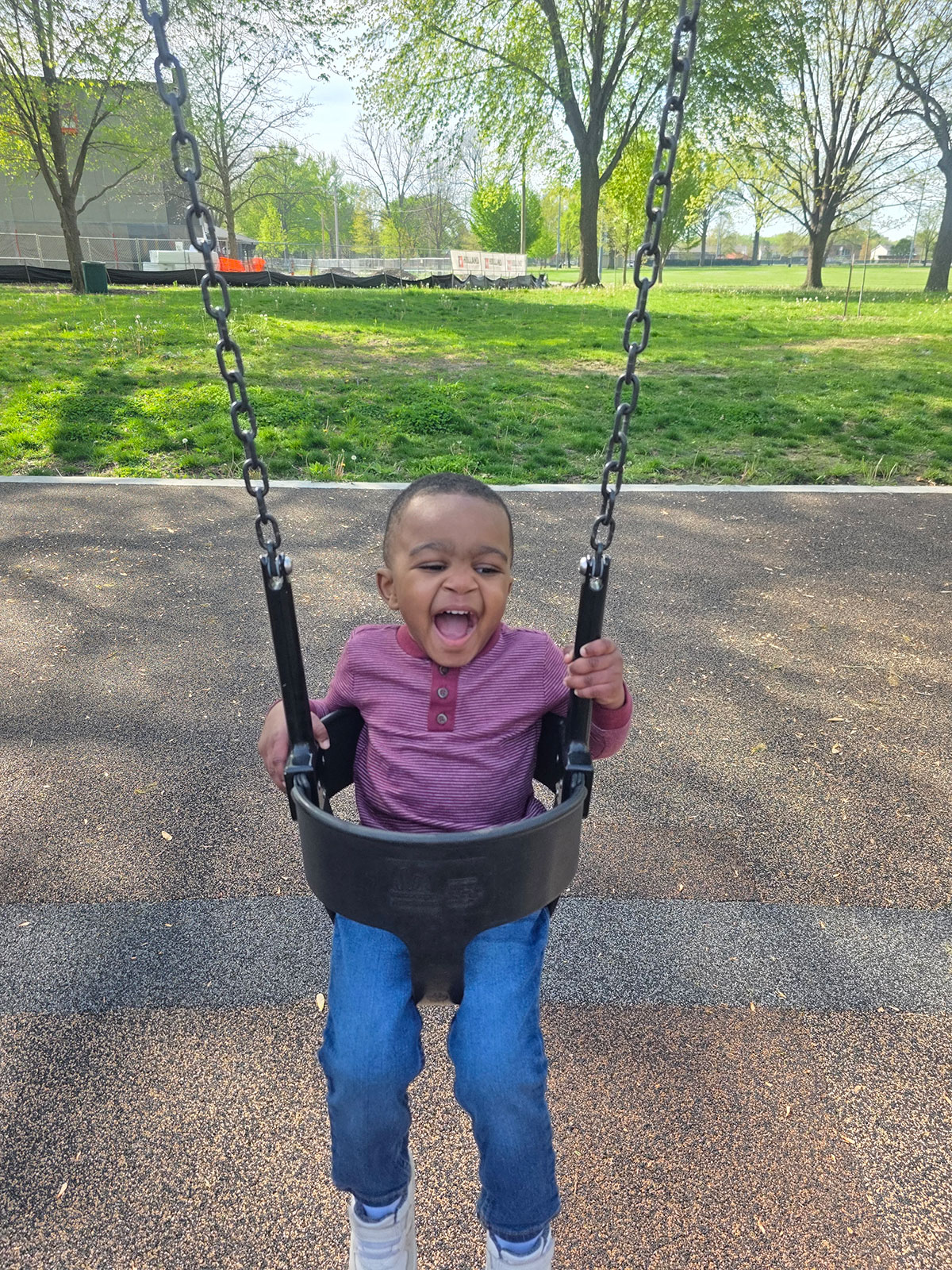
It’s been two years since Aveion’s heart surgery, and he is a typical, active toddler. In addition to his "medical duties” at home, he’s developed a love of music and the drums.
“I’m a drummer and his timing is impeccable,” Alan says. “His rhythm is top-notch.”
Kahdijah, Alan, and their children live in O’Fallon, Illinois, and visit Dr. Lee at the Washington University Pediatric Cardiology clinic* at Memorial Hospital in Shiloh for Aveion's annual checkup.
“I never dread an appointment with Dr. Lee,” Alan says. “I look forward to them.”
“Aveion is Dr. Lee’s patient, but she always asks about our other two kids, Averie and Aireon,” Kahdijah says. “If they’re not with us at the appointment, she asks all about them.”
For parents who recently learned their infant was born with a heart condition, Kahdijah offers this advice:
“Expect the unexpected and embrace it. Take it day by day and don’t look at the problem. Look at what you’re surrounded by, because I promise you, it will look different than the problem.”
* Clinical services in Illinois provided by Washington University Physicians in Illinois, Inc.